23/02/19
To give some background behind these next couple of blog posts, I recently took a trip with a few course fellows from my university to Florida as a module option. We stayed at the Vester Marine Field Station in Bonita Springs, which is owned by the Florida Gulf Coast University.
The week kicked off at barefoot beach. This preserve is located just a 10-minute drive away from the field station.
The park was established in 1909 and is 342 acres of natural land. Its owned by the State, however, 168 acres of it is leased to Collier County. Over 200 acres of the preserve is swampland.
Barefoot beach is one of the last undeveloped barrier islands on the Southwest coast of Florida. Barrier islands are stretches of land that lie parallel to the mainland, usually occurring in multiples. Barrier islands are very important as they can protect the mainland from storms and tidal activity.
Before our talk started we spotted a pair of Ospreys nesting, it’s towards the end of their nesting period so this was nice to see. Ospreys mate for life and live for approximately 25 years.

Photo: Ellie Short
We were given a talk by our guide Jimmy Trueluck. who is a “friend of barefoot beach”. The first thing he mentioned was “stabilising plants”, these are plants that hold sand together which are ultimately what help keep sandbars (natural submerged bars consisting of sand/other unconsolidated material) together, it’s these sandbars which can make up a barrier island.
There are 5 different zones at barefoot beach:
Maritime hammock
Estuary system
Coastal strand
Foredune
Upper shore
Maritime hammocks are found furthest away from the beachfront. They contain lots of stabilising plants and trees. One of which is Florida’s state tree- the Sabal Palm (Sabal palmetto). Also known as the Cabbage Palm or Tree of Life. It got the latter nickname due to its many uses. People used to use it for building houses, it produces sweet berries in the spring that can be eaten- these berries have a hard seed inside that can be ground down to make meal, fibre from the fronds were used to make fishnets as they’re very strong. Also the heart of the tree is edible and has a similar taste to cabbage (hence the nickname “Cabbage Palm”. This palm is protected. Palms are not actually trees. They’re monocots, in the family monocotyledoneae. Which in fact are related to grasses.
Another tree found in this zone is the White Stopper (Eugenia axillaris)- another Florida native. This tree is sometimes called the Skunk Tree as it secretes an oily substance that some people think smells like skunk although others believe it smells like faint coffee. It’s been found to stop diarrhoea.
The Gumbo Limbo (Bursera simaruba) is hard to miss with its dark red peeling bark- often referred to as the “Tourist Tree”. Another native tree, the sap of which is very sticky and was used as a natural glue, it was also used to catch birds which could then be eaten. The bark was used to seal wounds. Its a rapid grower and well adapted to several habitats including those with salty soils, because of these reasons and its low cost its often a recommended tree in regards to reforestation. It is one of the most wind-tolerant trees making it hurricane resistant and good for wind protection. It does produce fruit which is a capsule that encases a seed that’s covered in a red fatty aril (a seedcoat). Its this aril that is a food source to many birds including; the Masked Tityra (Tityra semifasciata) and the Bright-rumped Attila (Attila spadiceus).
The Seven-year Apple tree (Genipa clusiifolia) has quite a misleading name as it takes the tree around one year to produce its fruit, not seven. They’re green, but turn black and wrinkled when ripe. The flesh of the fruit tastes similar to liquorice but the seeds are mildly toxic. It is a native tree in Florida but in South America the pulp is used as a body dye.
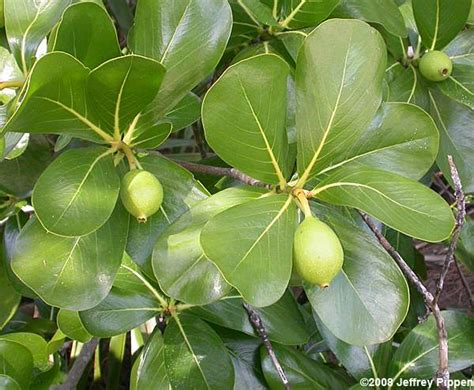
Photo: http://jeffpippen.com/plants/florida-plants.htm
The next three plants are examples of soil stabilisers, also found in the Maritime hammock zone. Prickly Pear Cactus also known as Indian fig (Opuntia ficus-indica) is a Gopher tortoise favourite and the pads are edible to humans as well. It has red fruit due to betalains- red and yellow pigments. The gel-like substance in the pads used to be used for hair conditioner and to treat sunburn.
Another is Golden Creeper or Beach Creeper (Ernodea littoralis). Surprisingly, this plant is in the coffee family. It’s tolerant of salt air but not salt water flooding. It produces small orange berries that birds feed on, they can be eaten by humans too and taste like apple. It spreads by its roots. It used to be used to treat whooping cough- which is where its nickname “coughweed” comes from.
The last example is Coastal Ragweed (Ambrosia hispida). This again grows by its roots. It used to be used to treat malaria and fevers.
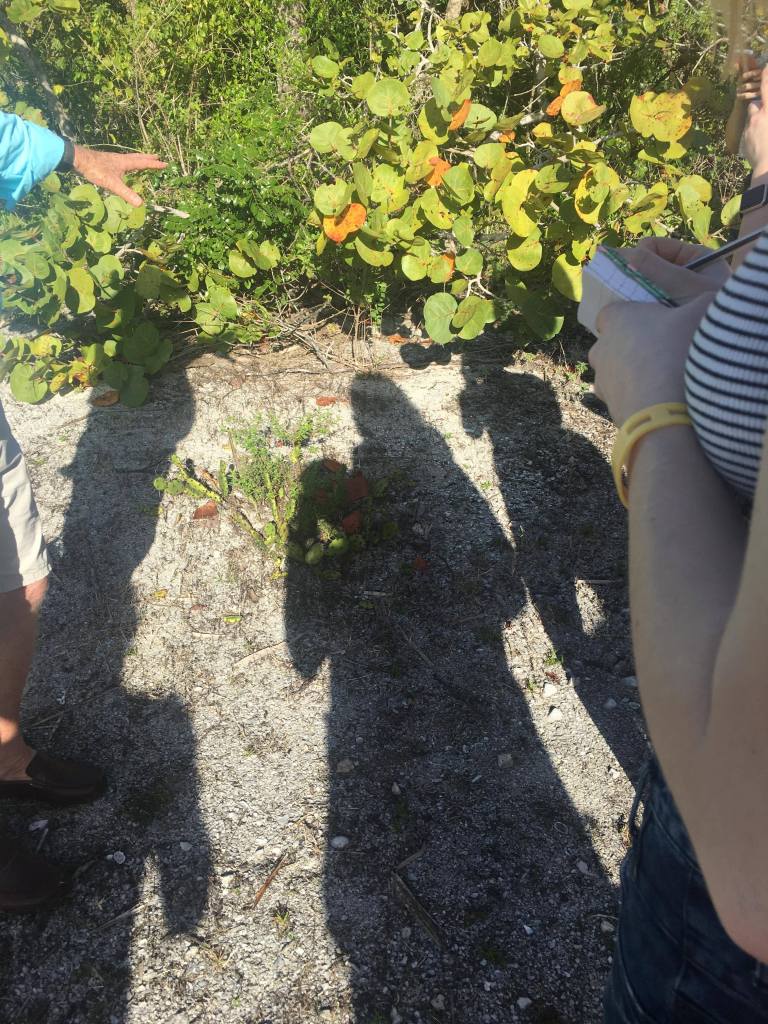
Photo: Ellie Short
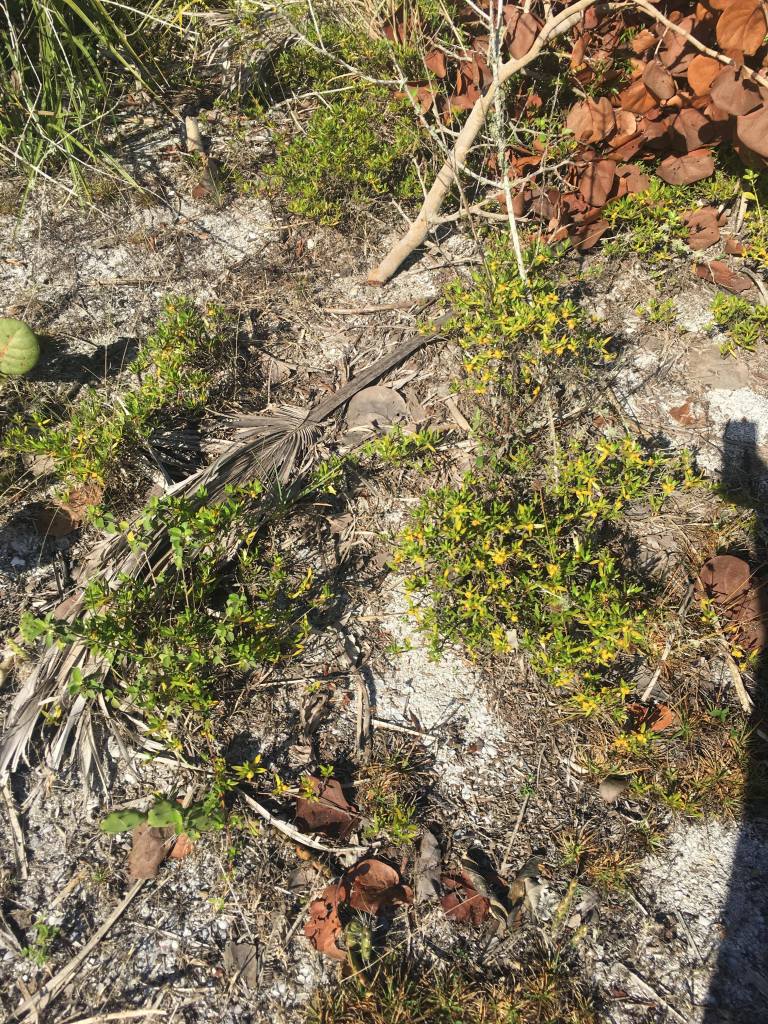
Photo: Ellie Short
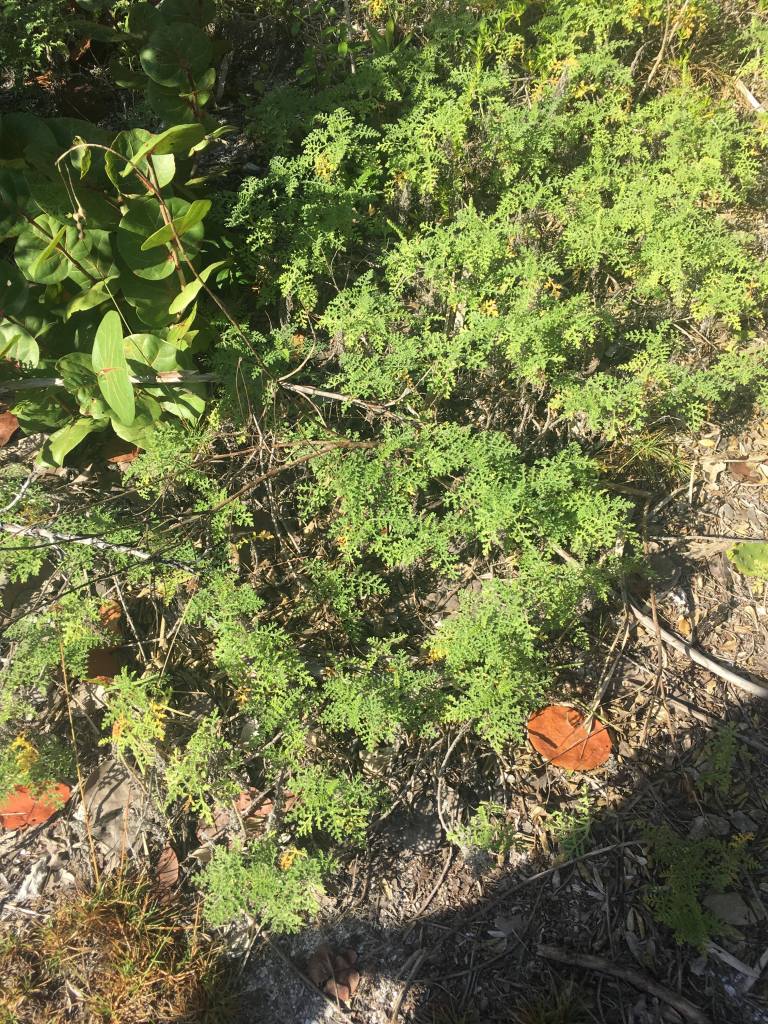
Photo: Ellie Short
A few other species of plants we saw included the Sea Grape (Coccoloba uvifera), which is a member of the buckwheat family. Its named as its fruit looks like a bunch of grapes, they have a sweet-tart taste. Their leaves can grow up to 12inches in diameter and when they’re scratched it leaves a permanent mark.
Also we saw an exotic invasive plant that the Preserve is trying to eradicate. The Brazilian Pepper (Schinus terebinthifolius) is a member of the cashew family and produces red berries, which are the reason the plant was imported originally. It has a resin that gives similar effects to that of Poison Ivy. Being a fast grower it makes it difficult to exterminate and it can only be properly killed by burning it, which can obviously have adverse effects on nearby native plants.

Photo: http://www.survivalworld.com/plants/Plants%20Photo%20Pages/north-american-plant-photo-pages/sea_grape_photo_page.html
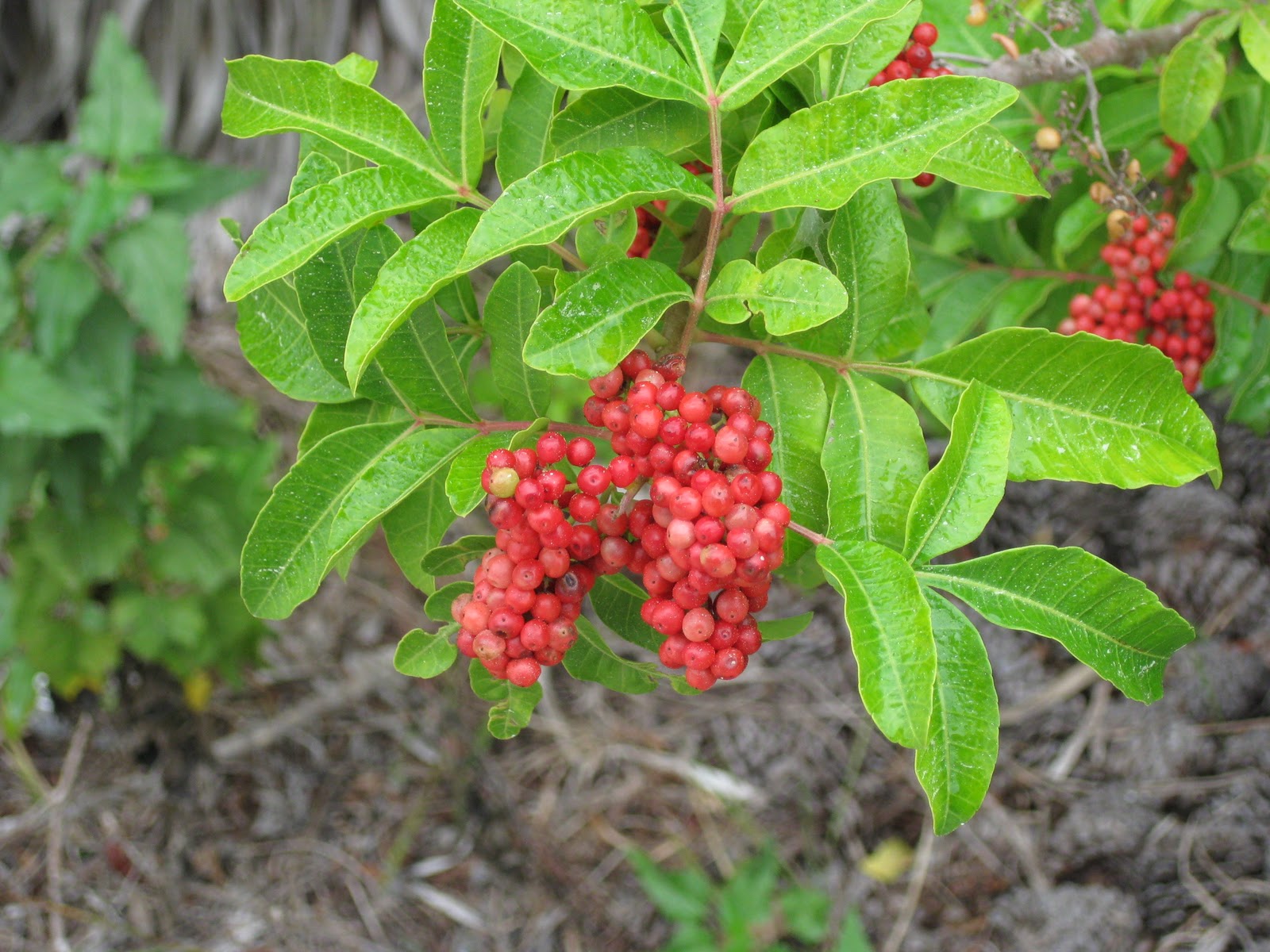
Photo: http://randomferments.blogspot.com/2010/11/brazilian-pepper.html
On our way to the next zone we saw our first of many Gopher tortoises (Gopherus Polyphemus) of the trip. It was around md-morning and this is the usual time that the tortoises come out of their burrows as its warming up outside. These tortoises bury until they hit ground water, this helps them control their body temperatures as they are cold-blooded. They can be quite helpful as during hard weather times they quite happily share their burrows with up to 300 different species of insects and animals. They have a lifespan of 60 years in the wild and over 100 in captivity. These are solitary animals but males will come to the entrance of female burrows to breed. The females will lay 5-7 eggs just outside of the burrow.
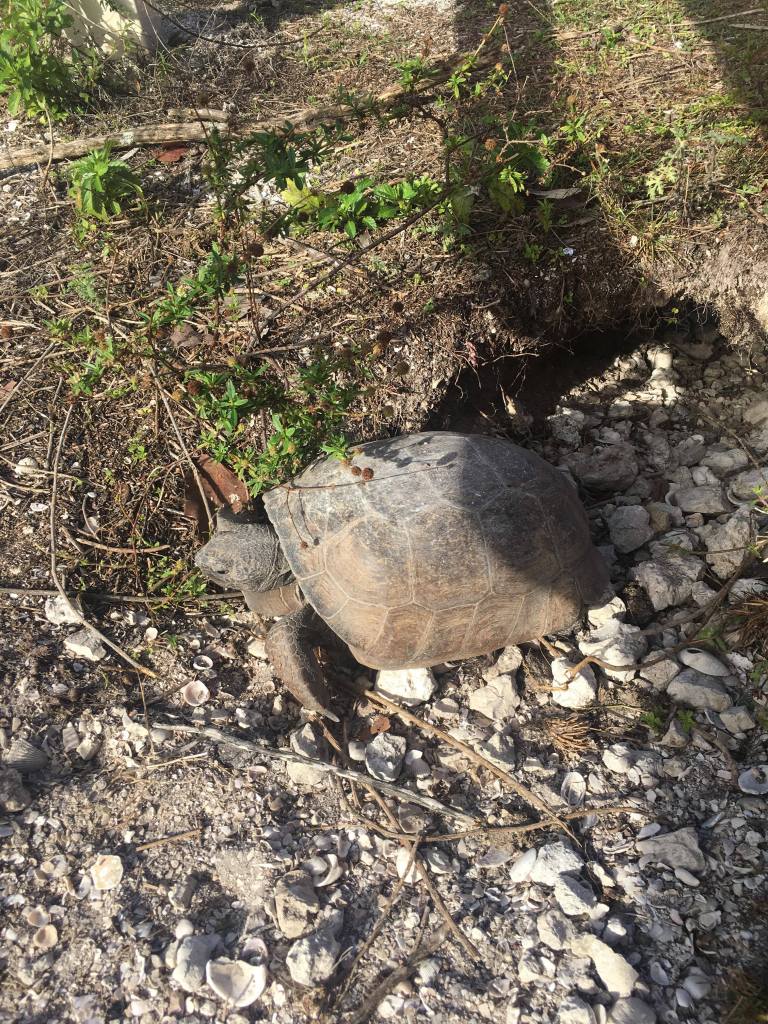
Photo: Ellie Short
We also saw some raccoon tracks and a glimpse of a raccoon disappear into the bushes. A Black Racer snake was seen on the mound by the Gopher Tortoise unfortunately I couldn’t snap a photo of it.
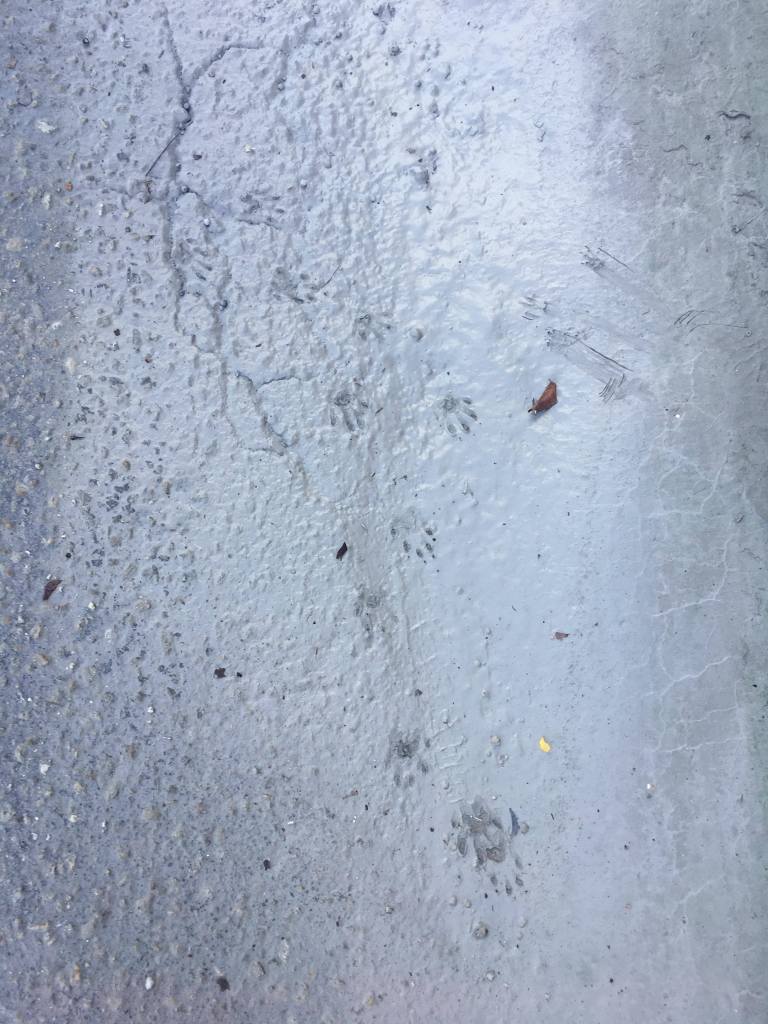
Photo: Ellie Short
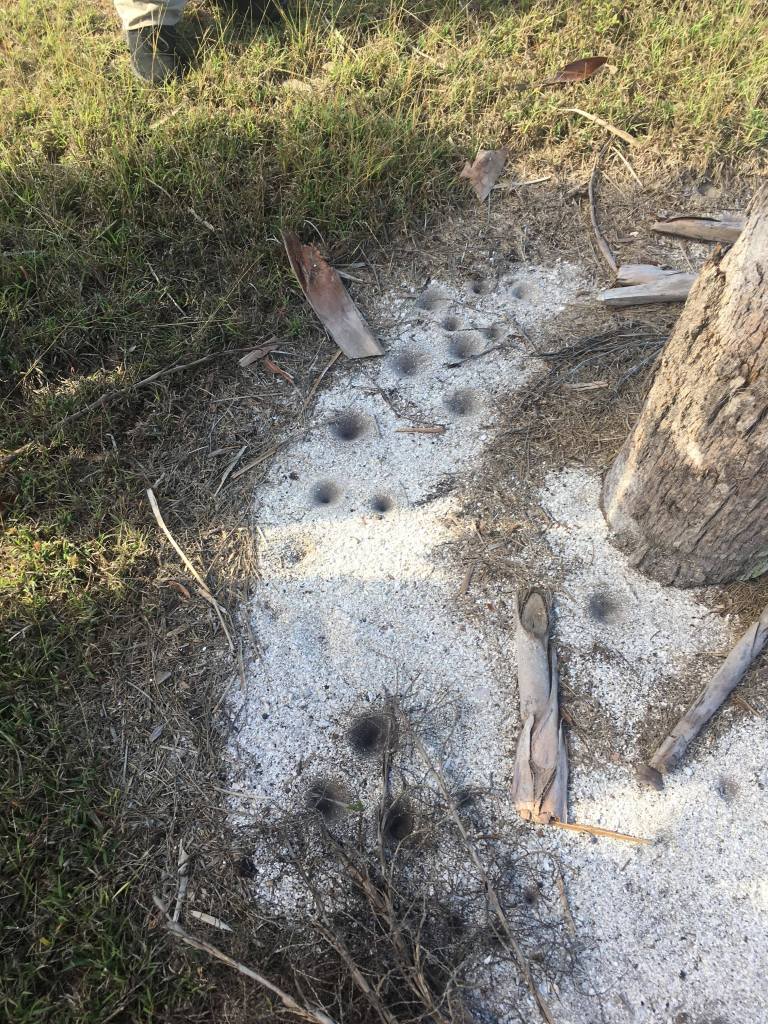
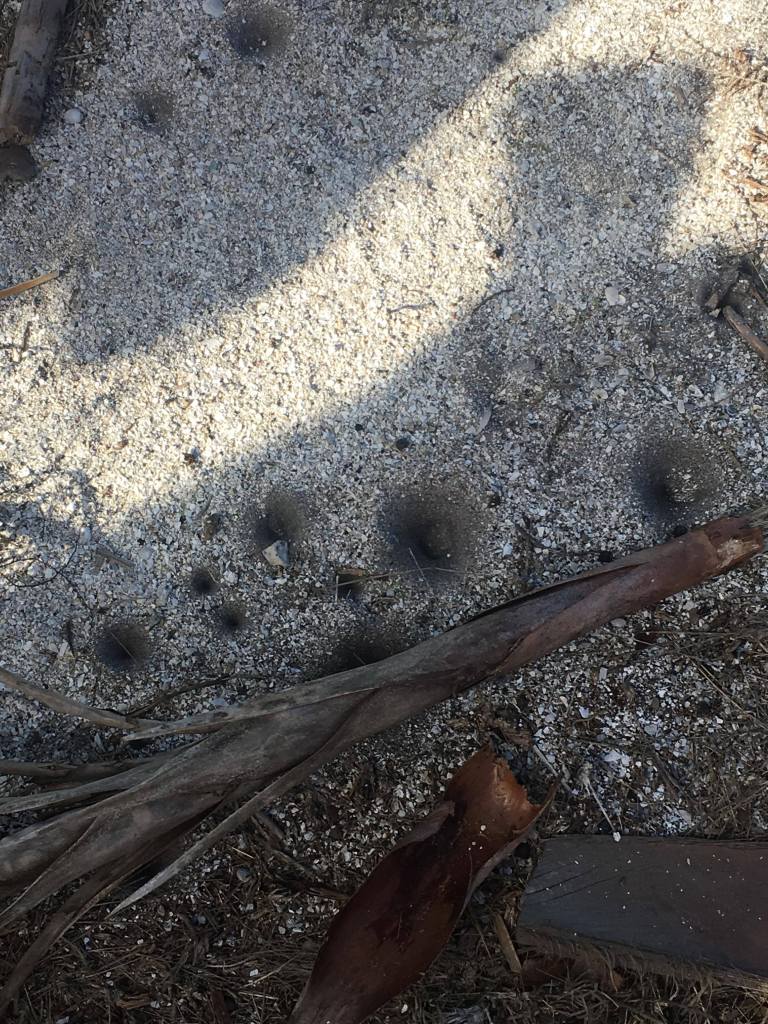
Jimmy pulled us to one side to talk about some strange holes in the ground around a tree. They turned out to be holes created by Antlions, an insect in the family
Myrmeleontidae. These insects are not ants, but called so because the sinkholes they create are to trap ants and other small insects.
We reached the Estuary zone next. An Estuary is an enclosed body of water where freshwater meets seawater. Its often referred to as “The Cradle Of The Sea”, as many young fish and mammals are raised in its brackish waters. Mangroves are common alongside estuaries (these will be discussed in more depth in a different post!).
The Coastal Strand is between the Maritime Hammock and Foredune zones.
The Coastal Strand is a plant community that’s along the shore in loose sand and before the high tide line.
Foredune is a dune ridge that runs parallel to the shore.
The final zone is upper shore where a lot of seaweed and wrack can be washed up. This is the first part of the beach.
This concludes my first day of the trip at Barefoot Beach!

 Life of El