25/02/19
Corkscrew Swamp Sanctuary was our next destination. This is a massive 13,000 acre plot of land- most of which is away from the boardwalk- that lies in the middle of the Corkscrew Watershed. It’s mainly made up of wetlands, including the largest remaining Bald Cypress (Taxodium distichum) forest in the world (700 acres worth). This forest houses the largest nesting colony of Endangered Wood Storks in the nation.
The boardwalk has been here since 1996 and is made of fire resistant wood.
There’s 28miles of firebreak and the Sanctuary has a prescribed burn every 3-5 years, this is to get rid of invasive species and put nutrients back into the soil. Also, an interesting fact is, some plants will only reproduce after a fire, these are known as pyrophile plants.
The Wet Prairie is great for fish and fish are important as they provide food for the birds, especially the wading varieties. In the dry season the prairie can hold a foot/foot and a half of water, this filters down into the aquafer.
In the past, loggers would come a year earlier to kill the Bald Cypress tree’s as they held so much water so this would allow them to drain, making them easier to manoeuvre.
The outside of the Cypress Forest had smaller Pond Cypress trees (Taxodium ascendens).
We were split into two groups and given a tour of the boardwalk, my groups tour guide was called Sharon.
Sharon spoke about many plants and animal species that the Sanctuary holds:
– Slash pines (Pinus elliottii) are a very fire resistant tree as they loose their limbs as they grow which prevent them from catching fire.
– Saw palmetto (Serenoa repens), is currently the only species in the genus Serenoa and is endemic to the South Eastern US. Its another hardy plant when it comes to wildfires as it has thick trunks and a deep root system. Its a food source for the Florida Black Bears. The berries look similar to black olives.
– We saw some species of Lauraceae family, which includes cinnamon and avocados. Unfortunately these are currently in jeopardy due to a disease outbreak and therefore those that are left are watched carefully and fruit from these trees are kept so when the disease has gone, plants can be grown from the seed stock.
– Some differences between Black Vultures and Turkey Vultures were highlighted. Black ones fly higher, have a silver “window” at the end of their wings (underside) and a shorter tail. Also Turkey Vultures fly with their wings further out and “rock & roll”. Vultures eat dead material because they have weak feet and so cant carry food. When they get startled they regurgitate.
– Love vine (Cassytha filiformis) is an obligate parasite. It’s called so as it has a reputation of being an aphrodisiac. It has no roots, and is yellow/ochre in colour with very small levels and fruits.
.gif)
– Sugarcane plumegrass (saccharum brevibarbe contortum). A native species.
– Red-shouldered Hawk (Buteo lineatus).
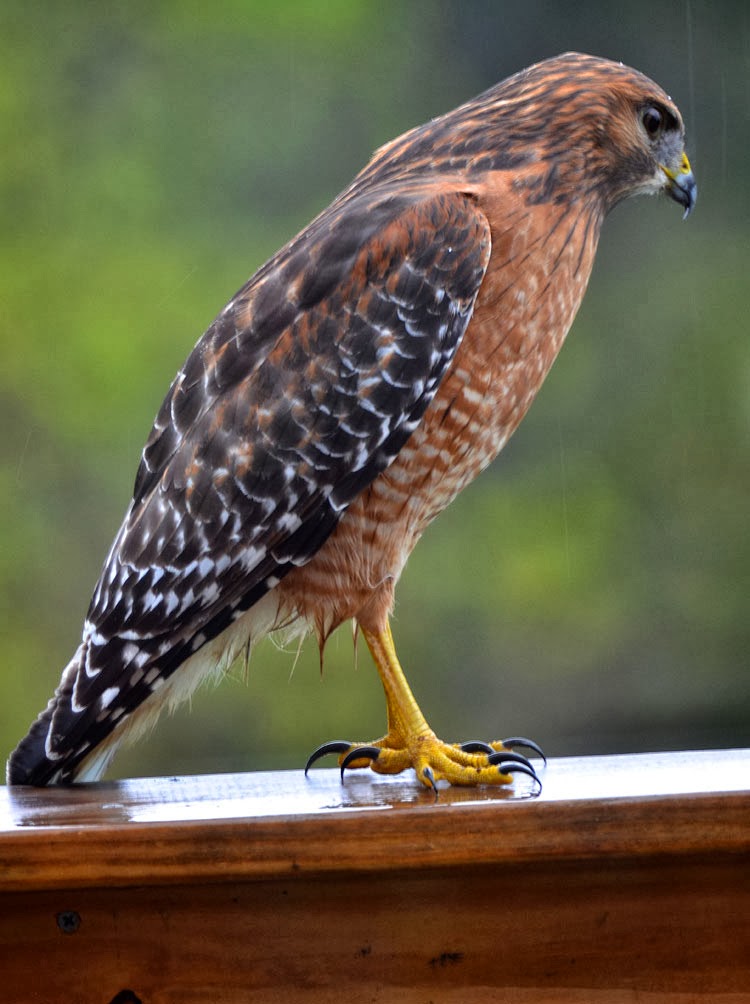
Photo: http://redandthepeanut.blogspot.com/2013/10/red-shouldered-hawk-in-rainand-on-our.html
– Red Maple Tree (Acer rubrum).
– Old Mans Beard Lichen (Genus = Usnea), which is often confused with Spanish moss.
Photo:http://amc-nh.org/resources/guides/lichens/
– Swamp Fern (Blechnum serrulatum), which can be characterised by its single leaf at the tip and is native to Florida.

Photo: http://www.inaturalist.org/taxa/130865-Blechnum-serrulatum
– Florida Strangler Fig (Ficus aurea). Birds eat the seeds but don’t digest them so essentially wherever they defecate is where a strangler fig will grow. It’s epiphytic (grows on the surface of a plant- not parasitic) until its roots are in the ground then its terrestrial (unless it was terrestrial to begin with) and eventually engulfs the host tree.
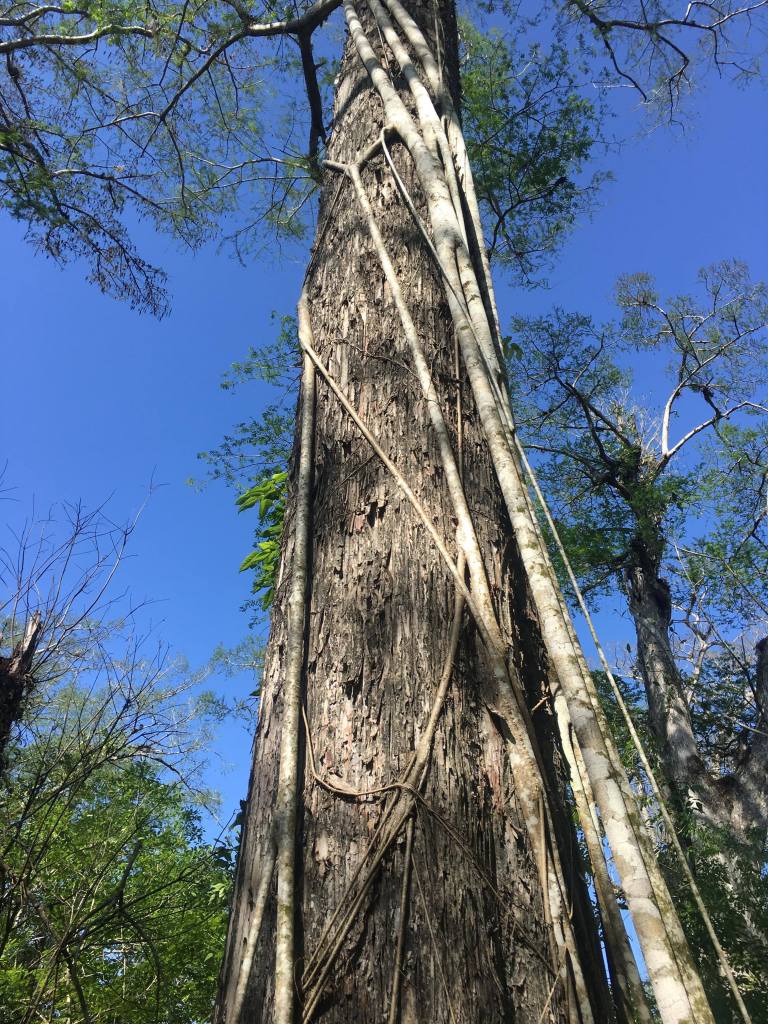
Photo: Ellie Short
– Little Blue Heron (Egretta caerulea), wading in the water, hiding in flora.
-Anhinga (Anhinga Anhinga). These birds have dense bones which help keep them buoyant. To dry themselves off they hold their wings out to the side. They get their name (which means snake bird in the Brazilian Tupi language) because when they swim only their long neck can be seen out of the water.
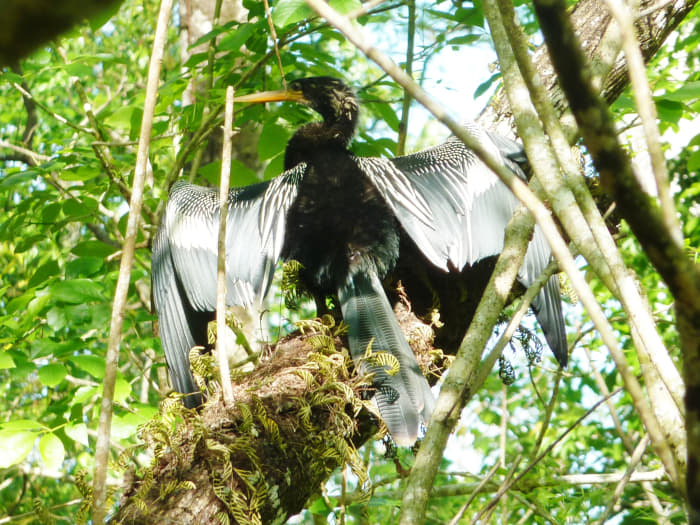
Photo: Haley Plumb
– Great Egret (Ardea alba). Lucky for us we got to witness one of these snowy white birds come up onto the boardwalk, it then moved off and stalked through the water, waving its neck from side to side.
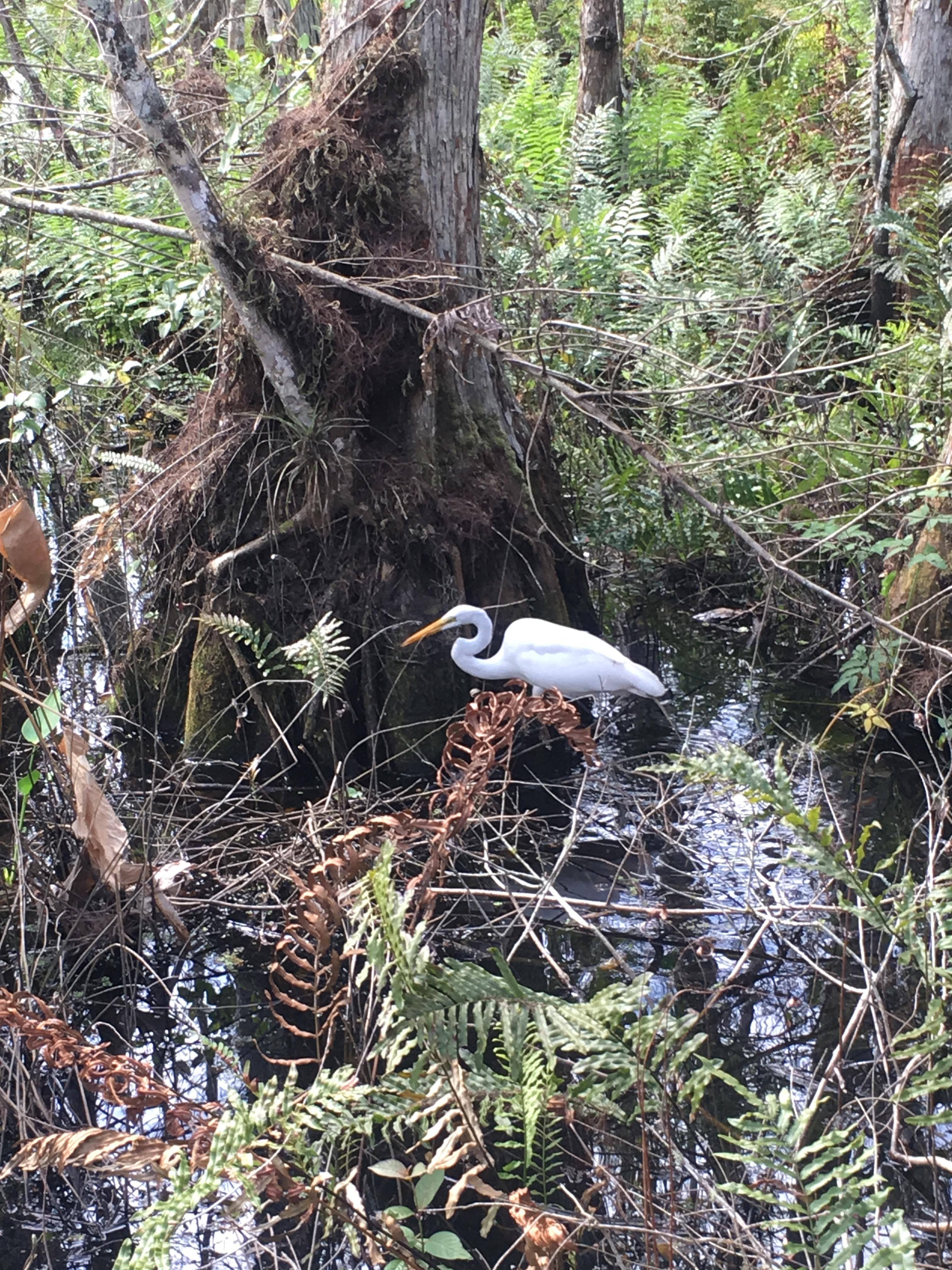
Photo: Ellie Short
– White Ibis (Eudocimus albus), attempting to feed.
– Green Anole (Anolis carolinensis). This native anole is a much rarer sight to see than the invasive brown anole.
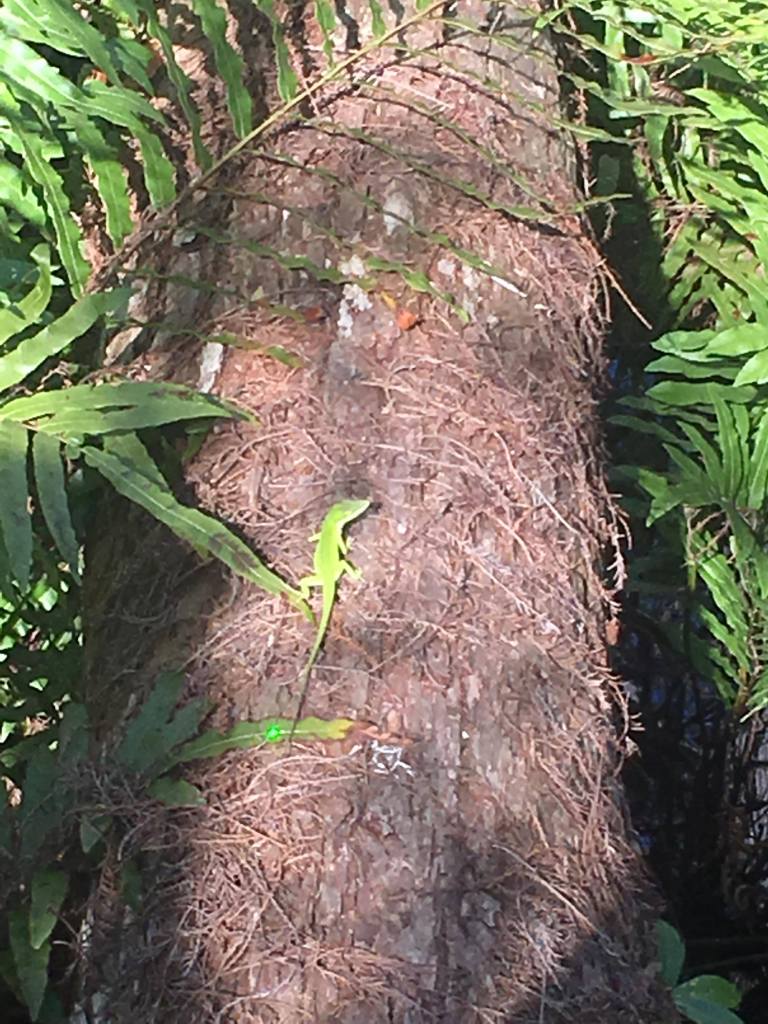
Photo: Ellie Short
– Alligator (Alligator mississippiensis). Including a Juvenile.
After our boardwalk a group of us went swamp wading to collect soil and water samples. This was a great opportunity to get some hands on experience in the field. We used plastic ziplock bags to collect the soil by grab sampling.
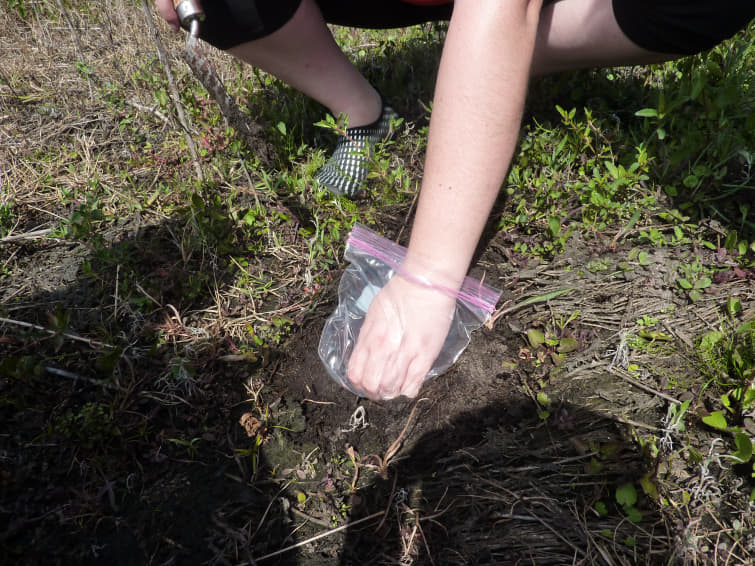
Photo: Haley Plumb
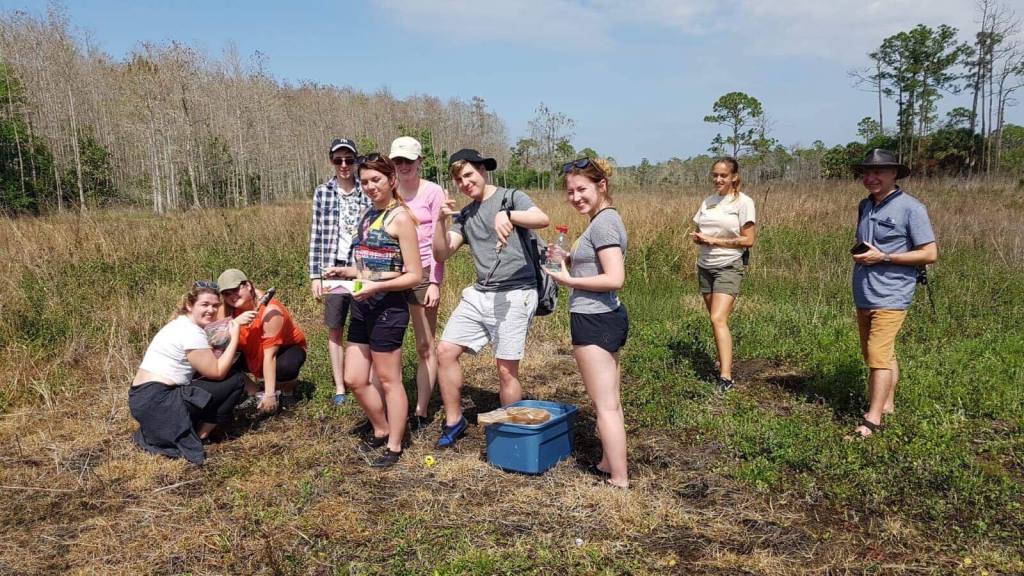
Photo: Christian Dunn
To collect the water sample we rinsed jars out at least 5 times and then filled them in still water so we got as little sediment as possible in the jars and then did the lids up underwater to ensure they were full to the top.
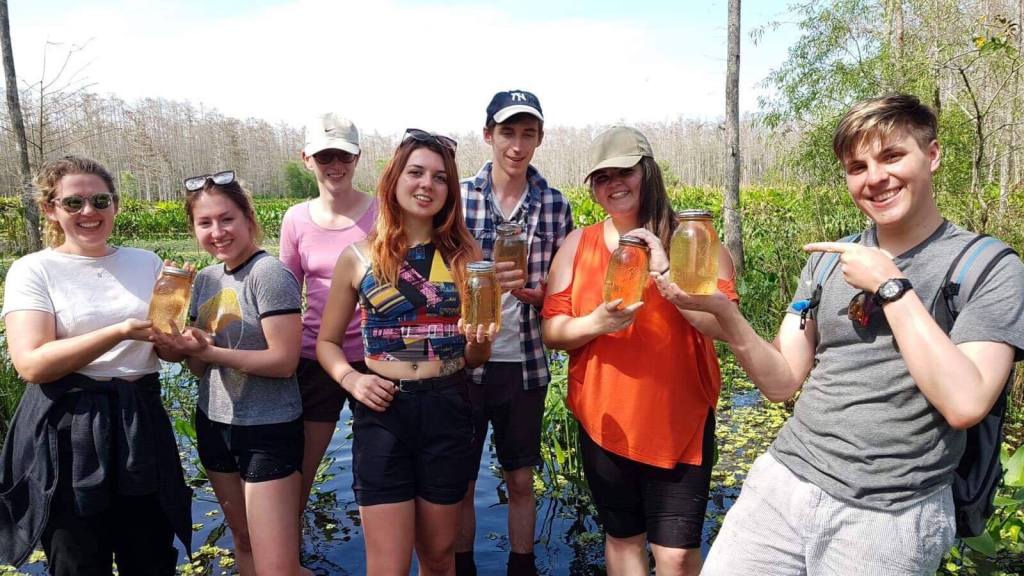
Photo: Christian Dunn
Corkscrew Swamp was definitely one of the most species rich days we had all week. It was incredible to see so much different flora and fauna.

 Life of El
.gif)