Blog posts

What next?

Before coming to university, I had my heart set on working with the big cats. I wasn’t sure how I would do this or what aspect of big cats I would focus on but I knew that’s what I wanted to do.
As my time at university went on, I got interested in other animals, like penguins and even some reptiles. I still wasnt sure what I wanted to do after I finished university.

Coming into this module I wasn’t sure if it would influence my future career choices as i thought this is something that would come to me in time.

However, I’ve got lots of new thoughts and feelings going on from this that have definitely been due to the talks Ive received because of this module and I think there is a level of importance to seeing what’s about.

The biggest influencer has been the masters conference as this is the next big move forward for me. Im excited and a part of me does think I will be going down the primate route in the future which is something I didn’t consider myself doing when I first came to university.

This module has helped me narrow down some career paths such as, I know what type of animal behaviour interests me most and its not to do with navigation!

I also made certain that animal behaviour was of most interest to me by going to other biology related talks such as the one on saponins. I do not enjoy biochemistry.

I don’t think I will attend any more life and environment seminars unless they really pique my interest as I have other time sensitive deadlines to achieve this year.

I think the next steps for me are to focus on the present. Achieve the best grade I can this year and prepare myself for a trip to Zanzibar over the coming summer.

From there I will complete my masters and then I think id like to take a year out doing internships or volunteering (not at the blue cross!). This will hopefully give me a good advantage when I join the real world.

Thank you for reading my blogs, hope you enjoyed.

How beneficial is volunteering?

I decided to do my last post on some volunteering I had the opportunity to take part in.

This was at the Blue Cross in Burford, which is one of two centres to rehome horses- the other being Rolleston in Staffordshire.

Ever since I was younger, I’ve loved horses and so when choosing a department to volunteer with, it was an easy pick.

There are a range of horses here, mostly native ponies that have come in as a group.

Daily chores here included; making feeds, grooming horses, bringing horses in and taking them out to the fields, mucking out stables, cleaning tack, and keeping the yard generally clean.

What isn’t offered as a volunteer is any “hands-on” work with the horses, things like riding or any rehabilitation work. This is obviously from a health and safety perspective.

This is a shame coming from someone who is seriously interested in the behaviour of animals. All I wanted to do was get involved but instead was left doing mediocre jobs that added little skill that could help me in the future, not to mention these were already things I had done before from when I used to ride.

Going off this I’m not sure how Id go about getting more valuable work experience in this sector as I’m convinced a lot of places offer the same sort of volunteering prospects.

What I think I would be interested in is the office side of this sort of work, and the actual rehoming of the horses. Maybe as well, management/care plans and new behavioural methods to try with difficult horses. This suggests I’m leaning towards a more science-based work ethic.
When I was volunteering here there were definitely things I would’ve done differently, such as increased levels of enrichment for the horses.

Nonetheless, I loved volunteering here because it meant I got horsey cuddles for free.

Chester zoo- ethics and welfare

30/01/2020

After spending a couple of hours wandering the zoo, we were lucky to receive a talk given by Andy Moss and Kat Finch that work at Chester zoo.
Andy Moss is the lead conservation scientist and Kat Finch is a behaviour and welfare scientific assistant.

They both gave a brief chat about the work they do at Chester. Andy works a lot with trying to educate people about zoos and how we can make them as beneficial to protecting the earths biodiversity as possible.
Kat focuses on how animal behaviour can be used to influence management decisions.

After their talk in the learning centre, we were put into groups and given a scenario. Within our groups we had to decide whether our scenario would get approved or not. E.g. my groups scenario was about altering the diet of zebra finches and taking blood samples from them. Essentially to see if size effected the life histories of animals.
We came to the decision that it would get approved, however it didn’t!  As they didn’t think it was deemed to be beneficial enough to warrant it.

We listened to all the other groups scenarios and whether or not they thought it would get approved or not and why.

I concluded that ethics and welfare can often be an emotional and difficult topic to work with. Lots of people will have differing view and opinions and not everyone will agree on a situation.

We got informed of the giraffe Marius that was euthanised because no zoo could take him, he was then cut up in front of customers of the zoo. This sparked a lot of outrage but euthanasia is sometimes necessary in this environment.

This was such a fun session that really got my brain working.

I think ethics and welfare could be a very interesting route to go down. It’s very holistic.

A masters… To do or not to do

31/01/2020

This post is much different to the others I’ve written about and perhaps the one of most importance to me at this present moment.

A conference was held on the 31st of January that allowed all students on the M-degree (or thinking of transferring on to it) to discuss potential masters projects with members of staff.

Not all staff members were present to talk to, but a handout was available on blackboard that contained a compilation of the master’s project options and we were encouraged to email any staff with questions we had.

I only spoke to two staff members; Alison Cameron and Katherine Jones.
Alison was running a couple of projects and the one that piqued my interest was a project on the Little Tern colony near Rhyl. It offered field research which I know I’m very interested in doing and because of the nature of the project it meant I would already have my data collected before term started in September.  
Katherine was running several projects and the ones I was most interested in were around the theme of animal enclosure size in zoos. Although not field based, I do have a passion for conservation in and welfare of animals and believed it might follow on nicely from my ethics and welfare module I’m currently studying.

Whilst both of these seemed very workable for me, I decided on a totally different project altogether.
After my success in my primatology module I considered maybe this would be a good route to pursue, I spoke to my current dissertation supervisor about the primate-based projects he was running and have decided to put my name down for a trip to Zanzibar! Whilst there I will be collecting data (topic to be decided) on Red Colobus monkeys, most likely assisting a PhD student that’s currently out there.
I’m excited and nervous for this, as although I collected my own data for my dissertation project, this is a really big step up.

What are saponins?

14/02.2020

This week’s life and environment seminar didn’t sound at all appealing to me, but in the spirit of looking to expand my interests I attended it anyway.

This seminar was taught by Martina Lahmann who lectures at Bangor university.
Martina specialises in glycobiology, and this particular seminar focused on saponins.

Saponins (come from the old word for soap) are compounds found widely in nature and some even in our body.
Cholestane and Spirostane saponins have a sugar on one end, Furostane and Triperpenoide saponins have sugars on both ends.
They’re all sugar molecules surrounded by carbon rings. The ones with just a single sugar molecule are ones that act most like soaps.

Some industrial applications of saponins include:
– Steroid hormones
– Food additives
– Fire extinguishers
– Denatured alcohol

Some biological applications include:
– Fish and snail poisons
– Ion channel blockers
– Anti inflammatory medication
– Flavour modifying substances

Martina was the first person to synthesise dioscin, which is a saponin.

Martina then also looked at the Ivy plant that has a particular compound called hyderagenin that is highly active on liver flukes.
To extract this is very difficult.
The process involves drying and grinding the berries and extracting the oil out. From then, you do a crude ivy fruit extract, and this gives you some saponins to work with to get the hederagenin.

The hederagenin compound came out so clean that it started to crystalize.

After doing some work making compounds with the hederagenin, they came across a publication about Anemoclema glaucifolium which is an extraordinary plant. The sugar molecules are oval shaped rather than rings and it is the only example of this on the planet.

So Martina (and lots of students) made compounds where hederagenin would be combined with various C-glycosides.

Using all this knowledge, Martina then went on to synthesising Anemoclemoside A, which hadn’t been done before.
They then moved on to Anemoclemoside B, starting by looking at the old synthesis. This one was more in depth than the previous one.

Without getting to into the logistics of it, over 100 compounds have been prepared and all of these have been evaluated against liver flukes.

This lecture has really solidified the fact that biochemistry is of no interest to me.
It really doesn’t grasp my attention enough to understand the concepts behind it.

What goes on at RSPB Cors Dyddga

11/02/2020

After the previous talk, I wasn’t sure whether attending another “bird group” talk would be relevant or beneficial for me. However, after having a look on their Facebook page I saw this week’s talk was about a local RSPB reserve, and so decided it could be quite interesting.

The talk was given by Ian Hawkins who is the site manager of RSPB Cors Ddyga reserve.

Cors Ddyga is a special scientific site of interest, about 15% of this is the RSPB reserve.

The site, found on Anglesey, is essentially a large wetland habitat, holding host to more than 30 scarce wetland plants.

The main reason for this reserve was to bring back Bitterns (Botaurus stellaris) as a welsh breeding bird.

See the source image
https://s3.amazonaws.com/com-aab-media/og/75242201-1200px.jpg
Bittern

The landscape of the reserve has changed massively over the years, from 1994 where there were two lakes and rush fields to 2012 where there are lakes, pools reed beds and grazing marshes.

The Bittern isn’t the conservation problem it once was now, thanks to this reserve, there are now over 200 breeding males.

Marsh harriers (Circus aeruginosus) have also returned to the area, this wasn’t planned but very much welcomed.

Other remarkable features include the first recorded breeding of the Savis warbler (Locustella luscinioides) in wales.

http://uabirds.org/taxons/444/fronpic1.jpg
Savis warbler


The grassland supports one of the only lapwing colonies in wales.

Islands and banks have been created to stop the wash out of soil and aquatic invertebrates that the lapwings enjoy eating.

In 2017 a visitor trail opened up. Which is think is an important aspect to help with the education of the public.

I really loved hearing about the “behind the scenes” of running a site such as this one. I never saw myself as doing the more business and creation side of working with animals, but this did intrigue me. I still don’t think birds are of the greatest interest to me but hearing about them and all of the things this reserve in particular has achieved (and is continuing to achieve) was wonderful.

To find out more about the reserve, check out the link below

https://www.rspb.org.uk/reserves-and-events/reserves-a-z/cors-ddyga/

For more information on Bangor’s ornithological society, follow their Facebook page

https://www.facebook.com/groups/384082195059181/


Cichlid fish- biodiversity, speciation & conservation

18/02/2020

The final talk I attended for my Science and Employability module was one held by Bangors zoological society.

This talk was by Prof. George Turner and focused on cichlid fish biodiversity, speciation and conservation.

The largest numbers of cichlid fish are found in lake Malawi, Tanganyika and Victoria. With as many as 1000 species in lake Malawi,
The species are all unique to the lakes in which they’re found.
There are small radiations in other lakes and lower levels of diversity in rivers.

The fish all vary in colour, morphology, feeding and behaviour.
Variety of colour likely comes from female sexual selection.

Rivers in South Africa are particularly rich in cichlids, most likely due to the now extinct lake Magadikadi.
Showing that what happens in these large lakes has an effect on the surrounding areas.

Recently Prof. Turner has been sequencing the lake Malawi radiation.
Full genome sequencing gave very different results to MtDNA. The big message here being that using mitochondrial sequencing DNA to look at differences doesn’t work for cichlids. Therefore, its important to get into genome wide data to properly look at the differences between the organisms.
One possibility for this is that cichlids don’t go through species bottlenecks and they also sometimes hybridise with themselves again, even after speciation.

One species, Astatotilapia Calliptera, isn’t found in just lake Malawi but also in the rivers that flow in and out of it and in rivers that aren’t connected to the lake at all.
Morphologically, the A.calliptera is similar to the other Astatotilapias. However, this species isn’t basal in the Malawi tree. A possible reason for this could be that it was there before the lake was formed. It doesn’t come out as basal because its still integrating with everything else but still doing what it was doing from the start.
This assumes basic sympatric speciation.
You would assume that the ancestral species gives rise to everything else but its not the case here.

See the source image
https://tropical-fish-keeping.com/
Astatotilapia Calliptera

One study Prof. Turner has been involved with since 2011, is sorting out the fishes that lives in the lakes and rivers of Tanzania. This proved difficult because of the old and often short descriptions of these species.
This found new distributions of “old” fishes and ones that have gone by several names.
Also it found 4 new species not described yet.

Prof. Turner rounded up his talk by discussing some problems cichlids are facing such as extinction of some species due to the Nile perch and there is also a problem with oil drilling under some of the lakes.

This was a very passionate and captivating talk and even almost tempted me to go into researching fish. This was the first time that morphology seemed interesting to me as it’s something that I tend to forget about most of the time. Unfortunately I don’t think researching fish will be a path a choose to follow any time soon.

What birds live in the Gambia?

05/02/2020

I decided to broaden my horizons outside of what the university offers and popped along to one of the sessions held by Bangors ornithological society.

What I noticed, that was really informative, was before the weeks talk commences members of the group are offered the opportunity to mention any rare or interesting bird sightings they’ve seen locally during the week.
One person reported seeing a snow bunting in Anglesey that apparently usually lives further up north and another spoke about some black caps (one with a geolocator tag on) that may’ve come from Germany, as the leader of the group mentioned he knew some research was being carried out on them there. 

This week’s talk was given by Holly Page and centred around her visit to The Gambia.

She spoke about plenty of the common birdlife that you would expect to see there including species like the pied crow and red-billed hornbill.

See the source image
https://i.ytimg.com/vi/kkN8R44Nr18/maxresdefault.jpg
Red-billed hornbill

Not only was wildlife discussed in depth, but the locals and lifestyle out in Gambia as well.
“Che the birdfeeder” has capitalised on a piece of chained off wasteland where he- for a small fee- puts out some water and birds flock in for you to observe.
It was emphasised that it isn’t food that draws birds around you in the Gambia, its water.

There’s a birdwatcher’s association information centre and from here you can hire a licensed guide that takes you round to the back of the centre where there’s a feeding area and pond. Some species Holly saw here included; black-capped babbler, red-billed firefinch and several pigeon species such as the red-eyed dove.
You can do a similar venture in Abuko nature reserve where guides go out early in the morning, prior to visitors, to find where the birds are, this really maximises the amount of species that you’ll see. Species seen here included; green and violet turaco and several bee-eater species such as swallow-tailed bee-eater and blue-cheeked bee-eater.

See the source image
https://elliesblog.family.blog/wp-content/uploads/2020/03/c6ff4-green_turaco_5.jpg
Green turaco

One aspect that Holly picked up on was the disregard some locals had toward the environment. Litter is a big issue there. Spaces behind the streets would have big expanses of rubbish piled up.

Holly also pointed out how the guides have a lack of binoculars (or the binoculars they do have are old and of poor working quality), which makes their job 10x harder.

Although listening to someone’s travel experience was fun, I didn’t find this talk to really affect my career choice massively (other than making me want to travel even more!) as it wasn’t really a specific talk about an organisation or research stance, more just a birdwatcher’s guide to The Gambia.

How do bats navigate?

27/09/19

This was the first talk of a handful of “Life and Environment” seminars I’d attend over the coming weeks as part of my “science and employability” module.  

Richard Holland was presenting the week’s talk and is a lecturer who’s taught in some of my modules previously, including my “advances in animal behaviour” module this year.

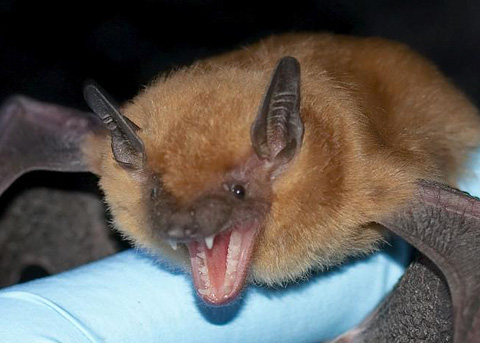
The talk was about orientation and navigation in bats.

See the source image
https://www.coniferousforest.com/wp-content/uploads/2016/08/Big-Brown-Bat-Pictures.jpg

Long distance mammal navigation is largely unknown, and bats provide a good starting point as their size makes them easy to study. They could also be a good comparative model for migratory songbirds and homing pigeons. 

Birds use the inclination of the magnetic field, and its only when you change the inclination of the magnetic field can you change the orientation of them.
Would this be the same for bats?

Mole rats were used as a test subject first. It was found that they built their nests in relation to magnetic field polarity not inclination.

Dr.Hollands study was carried out by first manipulating the magnetic field of some captured bats before and after sunset and then releasing them. It showed that by changing their magnetic field it affected their ability to make it make to their nests.
Inclination didn’t affect the bats like it does with birds, only polarity seems to be of importance. 

He then went on to look into the effects of sun disks and polarised light. Showing that’s is possible they use both methods for recalibrating their magnetic field.

Richard Hollands studies concluded that bats magnetic compass is calibrated by the sunset, although unsure whether its polarised light or sun disk.
Bats also use a magnetic particle mechanism that they use to detect the earths magnetic field but an open question to this is, where is it?

This talk did leave a few open-ended questions that sparked up some interest for further research.
Whilst I did find the ideas intriguing (and bats themselves) I’m not sure whether the concepts behind the research is something I particularly want to focus on.

Here are the links to Richard Hollands papers that we discussed during the talk:

https://www.nature.com/articles/444702a

https://www.pnas.org/content/107/15/6941.short

https://www.nature.com/articles/ncomms5488

https://royalsocietypublishing.org/doi/full/10.1098/rsbl.2015.0525

https://zslpublications.onlinelibrary.wiley.com/doi/abs/10.1111/jzo.12654

Florida Day 7

01/03/19

On our last full day we made a return to Barefoot Beach and Jimmy Truluck.

We were there to do a proper beach combing session but beforehand we had a talk about all the different types of shells we might be able to find and were given some interesting facts about particular creatures.

The Florida Horse Conch is the State shell. It actually belongs to the tulip family and can grow up to 2ft long. They live about 25 years.

The alphabet cone has venom that’s stronger than morphine, they harpoon their food.

Within the Mollusc group there are; Gastropods (the largest), Bivalves (2-shelled), Cephalopods and Tusk Shells (bury themselves in sediment).

The fighting conch is the only true conch. Its called so because it has a failing foot. All other conchs are carnivores.

Organisms can be left or right-handed. The way to tell is when looking at it front on its what side the opening is on.

The best way to clean a mollusc out of a shell is to freeze it and then pull it out once its thawed.

Lettered olives are naturally shiny as they wrap their mantle around the shell

Sea beans are essentially seeds/fruits that are designed to be able to withstand journeys across bodies of water and still be able to grow afterwards. One example is the Columbus bean that comes from the Monkey Ladder Vine.

After our talk we went and headed out to the beach, unfortunately I didn’t manage to pick up anything exciting but it was good fun.